Old wood or new wood?
That’s the question that matters most when you prune hydrangeas.
Get the type right. The timing follows.
Old wood types, such as bigleaf and oakleaf hydrangeas, are pruned right after flowering in summer.
New wood types, such as panicle and smooth hydrangeas, are cut back in late winter or early spring.
Hydrangeas are resilient, and most pruning mistakes are recoverable.
For decades, FELCO has helped gardeners make cleaner, more precise cuts. This guide shows you how to identify your hydrangea type, when and how to prune different varieties, and shape healthier plants season after season.
Identify Your Hydrangea Type Before Pruning
Before you cut anything, identify what kind of hydrangea you have. Does your plant bloom on old wood or new wood?
Old wood means stems that grew last year. New wood means stems that grow this season. Get that wrong, and you can remove next year’s flowers.
The easiest ways to identify your hydrangea are:
-
Check the cultivar name on the plant tag or nursery listing.
-
Notice when it blooms and what the flowers look like.
Hydrangeas That Bloom on Old Wood
These types set flower buds on stems from the previous season:
-
Bigleaf, including mophead and lacecap
-
Oakleaf
-
Mountain hydrangea
-
Climbing hydrangea
Pruning rule: prune right after flowering in summer. Do not prune in fall, winter, or spring.
Hydrangeas That Bloom on New Wood
These types form flower buds on current season growth:
-
Panicle hydrangea, including Limelight, Quick Fire, and Pinky Winky
-
Smooth hydrangea, including Annabelle, Incrediball, and Invincibelle varieties
Pruning rule: prune in late fall once dormant, or in late winter or early spring before growth starts. In summer, deadhead only.
Reblooming Hydrangeas: Endless Summer and Similar Varieties
Endless Summer and similar reblooming hydrangeas can bloom on both old and new wood, but for pruning purposes, treat them conservatively: remove only dead wood in spring, then do any shaping right after flowering.
This more conservative approach helps protect buds and is less likely to reduce flowering.

When to Prune Hydrangeas?
Once you know your type, the timing becomes much clearer.
Use these quick rules:
-
Old wood types, including bigleaf, oakleaf, mountain, and climbing hydrangeas, should be pruned right after flowering ends. For many gardens in the US, that means mid to late summer.
-
New wood types, including panicle and smooth hydrangeas, can be pruned in late fall once dormant or in late winter or early spring before vigorous new growth begins.
-
Endless Summer and similar reblooming types should be treated like old wood types for timing.
Focus on the plant, not just the calendar.
In colder climates, wait until winter damage is easier to assess. In warmer climates, pruning may happen earlier.
If you are wondering when is it too late to prune hydrangeas, use this rule: if an old wood hydrangea has leafed out and you can already see small flower buds forming on the stems, stop and wait until after bloom.
Light deadheading is fine at any time.
For old wood types, fall pruning is the main mistake. For panicle and smooth hydrangeas, fall pruning is acceptable once the plant is dormant, though many gardeners wait until spring.
If you are wondering when to cut hydrangeas for winter, the answer depends on type. For old wood hydrangeas, do nothing in fall beyond cleaning up obvious damage. For new wood hydrangeas, a light cut once dormant is fine.
|
Type |
Blooms On |
When to Prune |
Summer Action |
|
Bigleaf, Oakleaf, Mountain, Climbing |
Old wood |
Right after flowering |
Deadhead only |
|
Panicle, Smooth |
New wood |
Late fall when dormant, or late winter to early spring |
Deadhead only |
|
Endless Summer and similar rebloomers |
Treat like old wood for pruning |
Remove dead wood in spring, shape right after flowering |
Deadhead and shape lightly after bloom |
What Tools Do You Need to Prune Hydrangeas?
Hydrangeas can handle a lot. But rough cuts can still set them back.
A dull blade can tear the stem. The wrong tool can crush live wood. A tool that is too small can make the work harder on you and the plant.
You do not need many tools, just sharp ones that match the cut.

Bypass Pruning Shears
For most cuts, start with bypass pruning shears.
Bypass blades slide past each other for a cleaner cut. Anvil blades crush the stem and leave a rougher wound.
Use bypass pruning shears for most small to medium hydrangea stems. For thicker or older woody stems, move up to loppers instead of forcing hand pruners.
Good fits by hand size:
Loppers
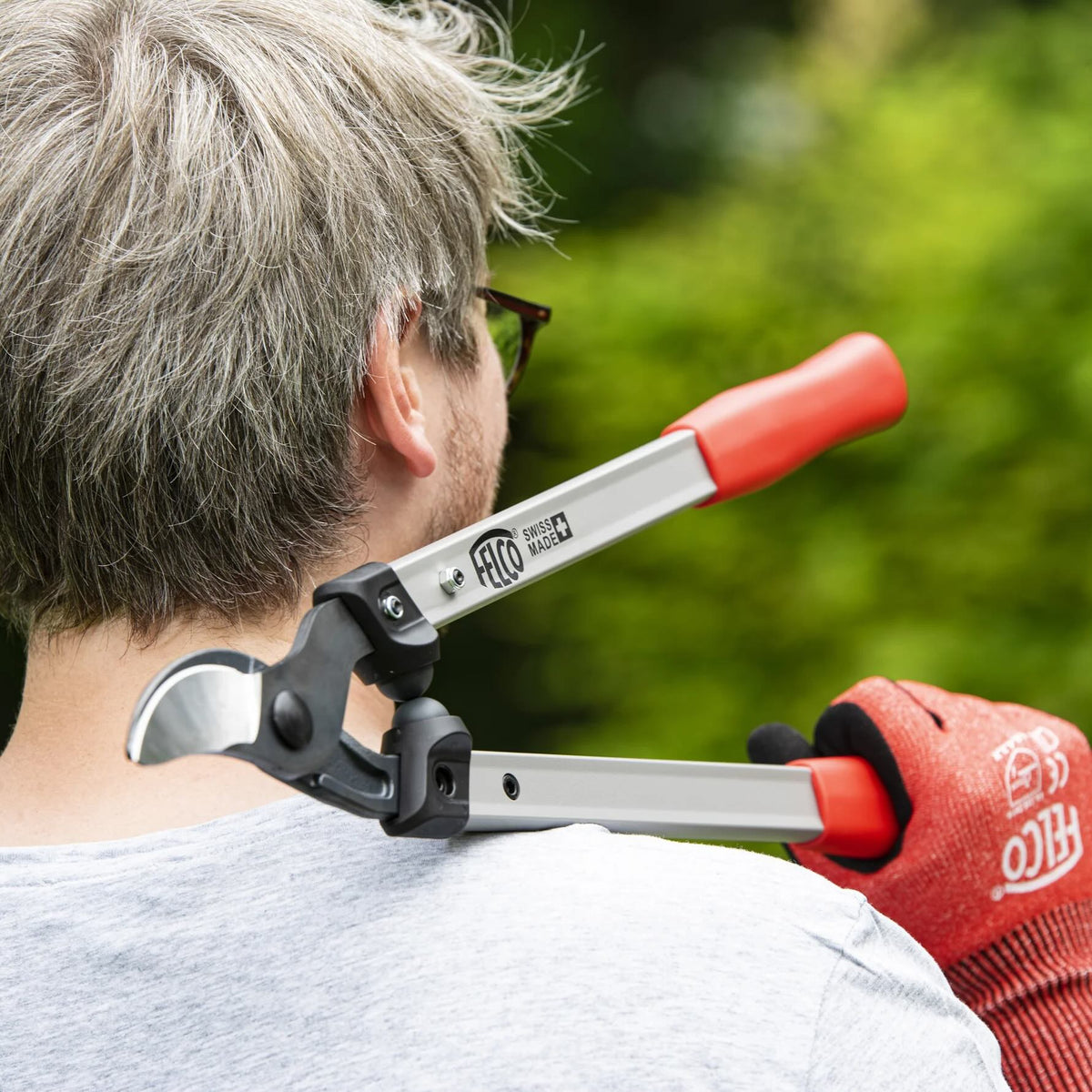
When stems get thicker, move up to loppers.
Long handles reduce strain and keep your hands farther from the shrub.
For tougher cuts on older hydrangeas, FELCO 221-70 is a strong option.
Pruning Saws
A pruning saw is optional, but useful for very old, thick stems during rejuvenation pruning.
Browse pull stroke pruning saws for mature or neglected shrubs.
Flower Pruners and Deadheading Shears
For lighter seasonal work, use flower pruners.
They make deadheading faster and easier on the hand.
Good options include FELCO 320, FELCO 321, and FELCO 322.
Gloves and Disinfectant
Wear gloves when handling woody stems and older shrubs.
Keep 70% isopropyl alcohol on a cloth nearby and wipe blades between plants.
Avoid bleach. It is corrosive to metal and can damage blades over time.
If a blade becomes dull or damaged, FELCO spare parts let you replace the part instead of the entire tool.
If your cuts start feeling rough, sharpen before the next session.
FELCO’s guide on how to sharpen pruning tools is a useful refresher.
How to Prune Hydrangeas: Step by Step
Learning how to prune hydrangeas is mostly about knowing what to remove first. It also answers a common question: how to cut hydrangeas without removing the stems that will carry future blooms.
Step 1: Identify Your Type Before Cutting Anything
Confirm whether your hydrangea blooms on old wood or new wood. The whole approach depends on this. If you are not sure, wait until you can identify it.
Step 2: Do the Scratch Test
Lightly scratch a stem with your thumbnail. Green underneath means the stem is alive. Brown and dry means it is dead.
This matters most in early spring. Dormant stems can look lifeless and still be very much alive.
Step 3: Remove Dead, Damaged, and Crossing Stems
Cut dead stems down to the base. Remove stems that cross and rub against each other.
Do not leave stubs.
Step 4: Remove Weak Stems
Remove weak stems where needed.
For panicle and smooth hydrangeas, take out thin, crowded stems that will not support blooms.
For old wood types, keep thinning light and avoid removing healthy stems unless they are dead, damaged, crossing, or overcrowded.
Step 5: Deadhead Spent Flowers
Cut spent flowerheads just below the bloom to the first pair of healthy buds.
For old wood types, do this right after flowering ends, before the plant starts setting next year’s buds. For new wood types, deadheading is fine any time during the growing season.
Step 6: Shape if Needed
Cut back panicle and smooth hydrangeas by about one third to one half in late winter to control size and encourage strong stems.
Keep shaping light on old wood types, and do it right after flowering. Never remove more than one third of the plant at one time.
Step 7: Make Each Cut Correctly
Cut just above a healthy outward facing bud. A slight angle helps shed water, but a clean cut matters more than the exact angle.
Too close can damage the bud. Too far leaves a stub.
Step 8: Disinfect Between Plants
Wipe blades with 70% isopropyl alcohol after each shrub, not just at the end of the session. This helps prevent powdery mildew and other fungal diseases from spreading.
Do not shear hydrangeas with hedge trimmers or cut every stem to the same height. Each stem should be pruned individually.
Pruning Hydrangeas by Variety
Use this quick comparison to match the plant you have with the cut it needs.
|
Variety or Type |
Blooms On |
When to Prune |
How Much to Remove |
Tip |
|
Limelight and other panicle hydrangeas |
New wood |
Late winter or early spring |
About one third to one half |
Harder pruning gives fewer but larger flowerheads. Limelight can be cut to roughly 24 to 36 inches to encourage stronger growth from the base. |
|
Endless Summer and similar rebloomers |
Treat like bigleaf for pruning |
Remove dead wood in spring, shape right after flowering |
Keep cuts light |
Treat these conservatively. Remove only dead wood in spring, then shape after bloom. |
|
Annabelle and other smooth hydrangeas |
New wood |
Late winter or early spring |
Cut back by about one third to one half |
Annabelle is a smooth hydrangea. Let newly planted shrubs establish before harder pruning. |
|
Bigleaf hydrangeas |
Old wood |
Right after flowering in summer |
Light thinning only |
Remove spent flowerheads to the first pair of healthy buds. For established plants, thin the oldest stems at the base each year. In colder zones, leaving spent heads through winter can help protect buds. |
|
Oakleaf hydrangeas |
Old wood |
Right after flowering in early to mid summer |
Light pruning only |
Usually needs less pruning than gardeners expect. Remove dead wood and thin lightly for shape. |
Deadheading Hydrangeas
Deadheading hydrangeas means removing spent flowerheads during or after the blooming season.
It keeps the shrub tidy and, for reblooming types, can redirect energy toward more flowers.
A quick snip can clean up the plant fast.
For old wood types, deadhead promptly after flowers fade by cutting just below the spent bloom to the first pair of healthy buds. Do this before late summer so you do not remove buds forming for next year.
For new wood types, deadheading is fine throughout the season. Lightweight flower pruners make the job faster and more precise.
Not every faded bloom needs to come off right away. Leaving flowerheads on through winter is also a valid choice.
Common Hydrangea Pruning Mistakes to Avoid
These are the mistakes that most often cost hydrangeas their blooms.
🔺 Pruning bigleaf or oakleaf hydrangeas in fall or spring
🔺 Assuming dormant stems are dead
🔺 Using anvil pruners on live wood
🔺 Shearing with hedge trimmers
🔺 Not disinfecting tools between plants
🔺 Pruning to control size when the plant is simply too large for the space
After Pruning: What to Do Next
Pruning sets the shrub up. A little aftercare helps it recover and grow well.
✅️ Water deeply after pruning.
✅️ Apply 2 to 3 inches of mulch around the base.
✅️ Feed in spring when new growth appears with a balanced slow release fertilizer.
✅️ Monitor new growth for aphids and powdery mildew in the first few weeks.
✅️ Keep pruners sharp and clean for next time.
Keep mulch away from the stems. For old wood types pruned in summer, do not fertilize right away.
Conclusion
Get the type right, and the timing becomes clear.
Hydrangeas are resilient, and most pruning mistakes are recoverable. No hydrangea strictly needs pruning to grow and bloom, but sharp, clean tools and correct timing make the biggest difference.
If you prune with care and cut only what the plant needs, your hydrangea will reward you with healthier growth and more reliable blooms.
Frequently Asked Questions
When is the best time to prune hydrangeas?
Old wood types: right after flowering, before new buds form. New wood types: late fall once dormant or late winter to early spring before new growth starts.
How do I know if my hydrangea blooms on old or new wood?
Check the cultivar name or watch when it blooms. Bigleaf, oakleaf, mountain, climbing, and Endless Summer are treated as old wood. Panicle and smooth bloom on new wood.
Can you prune hydrangeas in summer?
Yes. Prune old wood types after flowering. For new wood types, stick to deadheading.
Can you prune hydrangeas in the fall?
Old wood types: no, fall cuts remove next year’s buds. New wood types: yes, once fully dormant, though many gardeners wait until late winter or early spring.
Why are my hydrangeas not blooming?
Most often, they were pruned at the wrong time. Cutting old wood in fall, winter, or spring removes next year’s buds.
What tools do I need to prune hydrangeas?
Bypass pruners for most cuts, loppers for thicker stems, flower pruners for deadheading, and gloves for protection. Use a pruning saw for very old wood.
What happens if you don't prune hydrangeas?
They will still grow and bloom, but can become crowded and weaker over time.